Stairlift dimensions: Perfect fit guide for your home
 7
minutes reading time
7
minutes reading time
Stairlift dimensions vary depending on the stairlift model, rail type, and staircase layout, but many stairlifts can be installed on staircases as narrow as 69 cm. Factors such as staircase width, clearance, and rail positioning help determine which stairlift models are compatible with your home's layout.
Finding the right stairlift to fit in your home
For anyone thinking about adding a stairlift to make everyday home navigation easier, one of the most common questions is how it will fit on their stairs and in their home. So, is a stairlift feasible? In many cases, the answer is yes. Stairlift dimensions and specifications can help determine which models may work with your staircase layout and available space.
What is a stairlift and how does it work?
A stairlift is a motorized chair and rail system designed to carry a single user up and down a staircase. When we talk about stairlifts, we’re referring to a chair mounted to a motorized chassis that travels along a metal rail fixed directly to the stair treads as opposed to a platform or home lift. Stairlifts are intended for single-user seated travel and are not designed to transport wheelchairs or multiple riders simultaneously.
As a practical home accessibility solution, a stairlift allows people to move between floors without requiring major structural changes to the home. The rail is mounted directly to the stairs, allowing the stairlift to follow the existing staircase layout while maintaining staircase access and clearance.
Types of stairlifts and where they can be installed
Stairlifts can be fitted to straight, curved, or outdoor staircases and come with a variety of options to suit the user’s needs. Straight stairlifts are mounted to a single, straight rail, cut to the precise length of the staircase, while curved stairlifts are custom-made for the bends and turns of a curved or multi-flight staircase. Outdoor stairlifts are similar in design but weather-resistant.
Stairlift dimensions by type: straight, curved, and outdoor models
Stairlift dimensions can vary depending on the staircase type, rail configuration, and stairlift model selected. Straight, curved, and outdoor stairlifts each use different rail systems and may require different amounts of staircase width and clearance.
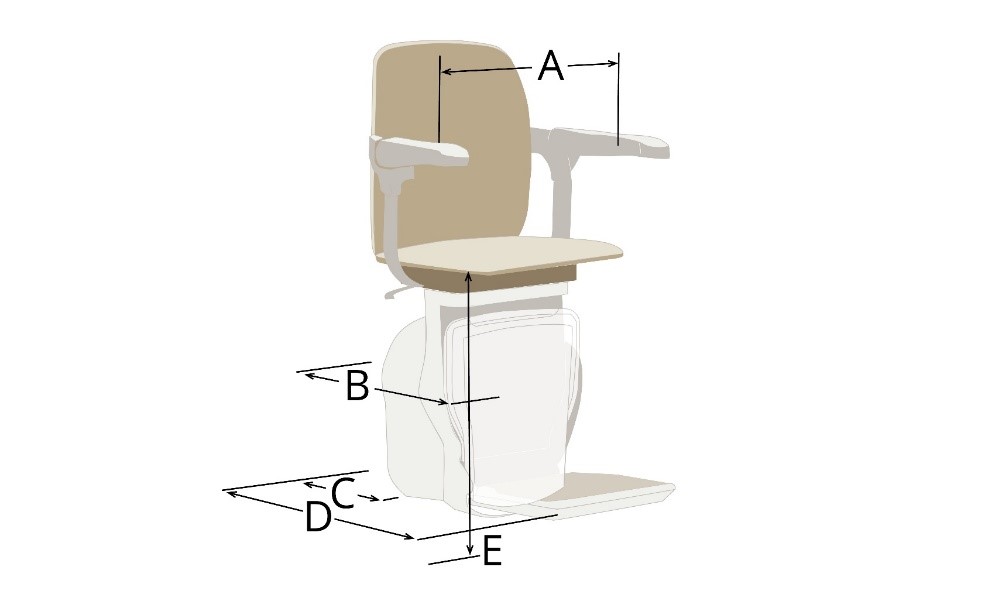
The dimensions below reflect common stairlift measurements for standard configurations, including folded depth, rail position, seat height, and minimum staircase width. All dimensions shown are nominal.
Straight stairlift dimensions and minimum stair width
Straight stairlifts use a single rail designed for staircases without turns or landings. In many cases, they can be installed on staircases as narrow as 69 cm, though staircase width is measured from the furthest obstruction, including handrails, trim, or mouldings.
- Chair Width (inside of armrests) = 52 cm
- Depth from Wall (Folded) = 37 cm
- Rail to Wall (Outside Edge of Rail) = 15 cm
- Depth from Wall (Unfolded) = 66 cm
- Seat Height (adjusted at installation) = 55 to 67 cm
- Minimum Staircase Width = 69 cm
Curved stairlift dimensions and configuration considerations
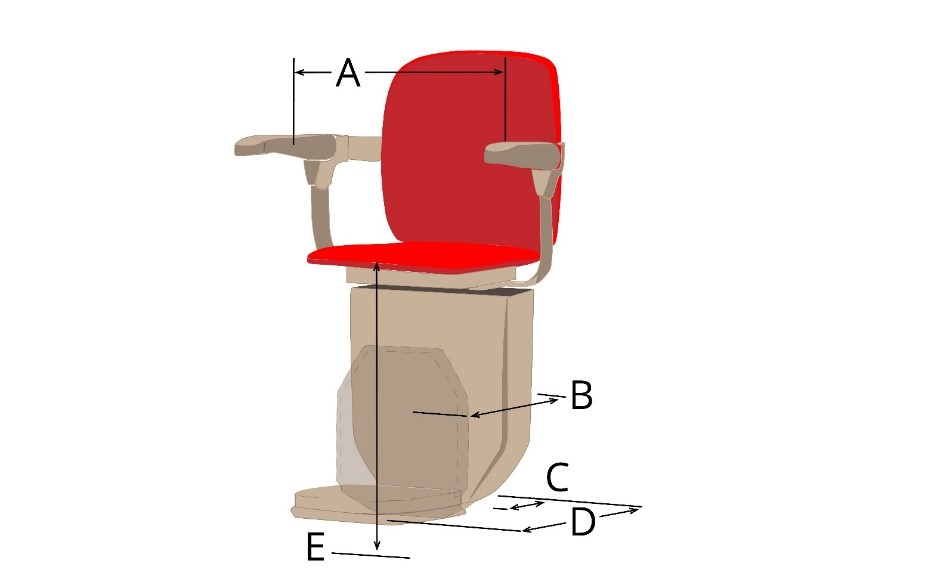
Curved stairlifts are designed for staircases with turns, landings, or multiple flights, using modular or custom rail systems configured to the stair layout. Because curved rails follow the shape of the staircase, dimensions and clearance can vary depending on the rail configuration and start or finish positions.
- Chair Width (inside of armrests) = 52 cm
- Depth from Wall (Folded) = 41 cm (depending on rail start position)
- Rail to Wall = 15 cm (will vary, depending on turns and configuration)
- Depth from Wall (Unfolded) = 68 cm (may vary depending on configuration)
- Seat Height = 57 cm
-
Minimum Staircase Width = 69-76 cm (depending on configuration)
Outdoor stairlift dimensions and space requirements
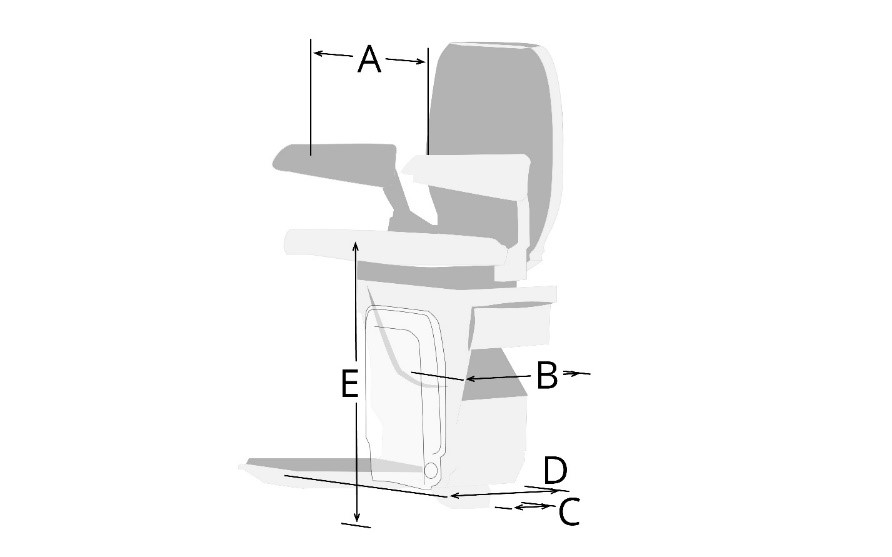
Outdoor stairlifts are designed for exterior staircases such as porches, decks, garage entries, and garden access points. These stairlifts use weather-resistant components designed for outdoor conditions while following many of the same rail and clearance requirements as indoor straight stairlifts.
- Chair Width (inside of armrests) = 48 cm
- Depth from Wall (Folded) = 37 cm
- Rail to Wall (Outside Edge of Rail) = 20 cm
- Depth from Wall (Unfolded) = 64 cm
- Seat Height (adjustable for Straight) = 55 to 67 cm
- Minimum Staircase Width = 66 cm
Stairlift specifications and installation requirements
Stairlift specifications can vary depending on the model, staircase layout, and rail type selected. Factors such as weight capacity, operating speed, electrical access, staircase width, and rail position all help determine how the stairlift will function within the space and what may be required for installation.
Stairlift weight capacity by model
Stairlift weight capacity varies by model, rail type, and whether the staircase is straight or curved. The weight capacities below reflect standard configurations across the Stannah stairlift range.
- Straight stairlift weight capacity: 159 kg.
- Curved stairlift weight capacity: 136 kg.
- Curved stairlift weight capacity with 260 Plus (heavy duty option): 160 kg.
- Straight stairlift weight capacity: 159 kg.
- Curved stairlift weight capacity: 136 kg.
- Curved stairlift weight capacity with 260 Plus (heavy duty option): 160 kg.
Siena One stairlift weight capacity: 159 kg.
Sadler stairlift weight capacity: 136 kg.
Outdoor stairlift weight capacity: 136 kg.
Stairlift speed and performance
All Stannah stairlifts operate at approximately 5.5 metres per minute across stairlift models. The operating speed is designed to provide controlled travel up and down the staircase while maintaining consistent performance on both straight and curved rail systems.
Electrical requirements for stairlift installation
Stairlifts operate using battery-powered systems that charge from a standard household outlet located near the staircase. For an outdoor stairlift, you will need access to an indoor outlet nearby. A Stannah advisor will help you choose an appropriate outlet during your free in-home survey. A stairlift is energy-efficient and uses a relatively small amount of electricity during normal operation, comparable to that of a standard coffee pot or phone charger.
How wide do stairs need to be for a stairlift?
Minimum stair width depends on the model you choose and any obstructions on the staircase. Generally speaking, straight stairlifts require a 69 cm wide staircase, while curved stairlifts need around 76 cm (depending on the shape of your stairs). It is important to note that these measurements are from the furthest obstruction, so handrails, mouldings, and other obstructions can reduce your staircase width. In some cases, handrails might need to be removed.
Stairlift rail position and clearance from the wall
The position of a stairlift rail depends on the staircase layout, rail type, and stairlift model selected. On most straight staircases, the outside edge of the rail is positioned about 15 cm from the wall or furthest obstruction.
For curved stairlifts, rail-to-wall clearance can vary based on turns, landings, and the overall rail configuration. On many straight sections of a curved staircase, the rail is also typically positioned around 15 cm from the wall, though measurements may vary throughout the staircase layout.
How to measure for a stairlift
Stairlift measurements are taken during a no-obligation stair survey, where a Stannah stairlift advisor will visit your home to discuss your needs and recommend the best option for you and your home.
Measuring straight stairs
Straight stairs are measured for length and width using a standard tape measure. Special care is taken to identify potential obstructions, such as a handrail or limited head clearance near the top of the stairs. Doors at the top landing or near the bottom are also considered, with the optional retractable rail providing a solution in most cases. The stairlift advisor will also review staircase clearance and egress to help maintain safe access around the staircase layout. There must also be sufficient space for the chair to swivel at the top of the stairs, so users can get off safely.
Measuring curved stairs
When measuring stairs that turn, Stannah sales advisors use a 3D scanning and mapping process to document the full staircase layout, including turns, landings, and changes in direction. Measurements are taken along the edge of each stair tread to establish the rail path, while staircase width, bulkhead clearance, and egress are also reviewed to confirm there is sufficient space for stairlift travel and installation.
Once the staircase is documented, the measurements and layout details are used to design a custom rail system that follows the exact shape and path of the stairs. Because curved stairlifts use custom rail systems, they can accommodate a variety of rail starts and finishes based on the layout of the home. In some configurations, the rail can start around a corner from the staircase or continue onto the top landing to help improve entry and exit positioning.
Next steps: Choosing the right stairlift for your home
Now that you have a sense of basic stairlift dimensions and specifications, you can explore different stairlift models, rail types, and installation options in more detail. Our complete stairlift buying guide walks through the process step by step, from comparing models to preparing for installation.
When you’re ready, a Stannah stairlift advisor can answer questions, review your staircase layout, conduct a free stair survey, and provide a custom quote.
Would you like a free brochure?
Request your free glossy brochure now, and get it delivered straight to your door.