The requirements to install a stairlift in your home
 7
minutes reading time
7
minutes reading time
In most homes, stairlift installation does not require remodeling, as long as there is sufficient space on the staircase, access to power, and safe entry and exit points. You don’t need extensive building work or heavy construction to have a stairlift installed. Stairlifts are mounted to the stair treads rather than the wall, so installation is based on the layout of your staircase and a few key measurements taken during an in-home assessment. This guide outlines the factors that determine stairlift feasibility and what to review before installation.
Stairlift Feasibility: What You’ll Need to Get a Stairlift Installed
Stairlift feasibility depends on a few key factors, including access to power, staircase width, head clearance, and available space at the top and bottom of the stairs. These elements are reviewed during an in-home assessment to confirm that the staircase can support a stairlift installation.
Power supply requirements for a stairlift
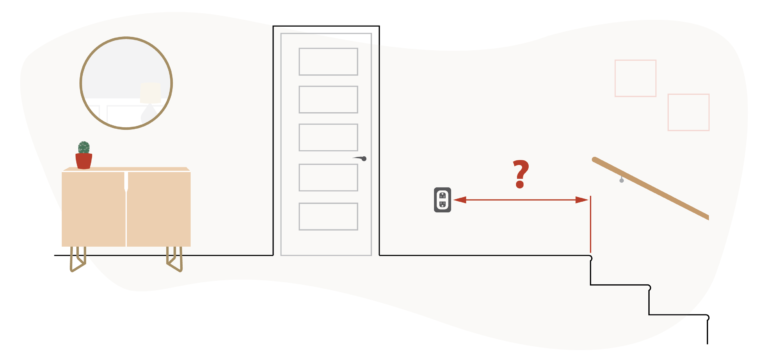
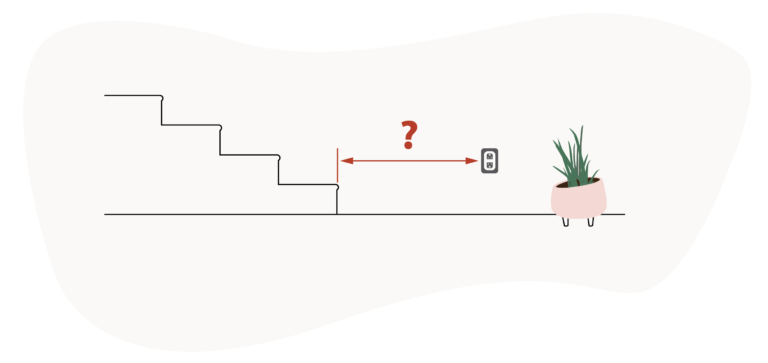
A nearby power outlet is required for stairlift installation, typically within reach of the top or bottom of the stairs. Stairlifts use battery-powered operation, with the outlet used to charge the unit while it is parked, allowing it to continue running during a power outage. If an outlet is not already located near the staircase, an electrician may be needed to add one before the stairlift is installed.
Minimum stair width for stairlift installation
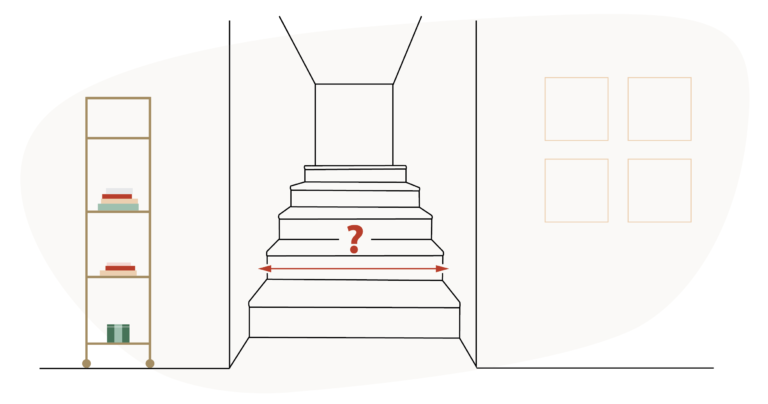
In most homes, a staircase width of around 28 inches for straight stairlifts and 30 inches for curved stairlifts is sufficient, though exact requirements depend on the layout and any obstructions. The minimum staircase width needed for a stairlift installation depends on the type of stairs and the available space along the stair run. If the space is tighter, Stannah has the ability to customize a stairlift to fit a space closer to 27 inches wide.
Width requirements measure from the furthest obstruction, meaning that handrails, furniture moldings, and other obstructions all reduce your staircase width. Some homeowners opt to remove or reposition handrails to create more space. Stairlifts can often be fitted on narrower staircases by working within these constraints and selecting a configuration that maintains usable space.
Head clearance and staircase safety considerations
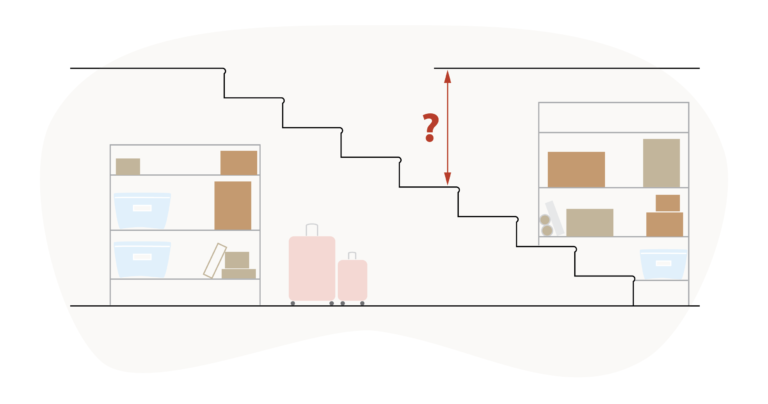
In most homes, head clearance is not a limiting factor for stairlift installation, though it is reviewed to ensure safe use along the full stair run. Bulkhead clearance and ceiling height are more likely to be considerations on stairs or in areas where the ceiling slopes along the staircase. During an in-home assessment, measurements are taken to confirm there is enough space to sit and travel without obstruction.
Space required at the top and bottom of the stairs
Stairlift installation requires sufficient space at the top and bottom of the staircase to allow for safe entry and exit. Egress, or the space needed to move on and off the staircase, is a key factor when reviewing these areas. The stairlift must have a clear start and finish point, with enough room to get on and off the seat without obstruction. In most cases, the rail for a straight stairlift extends slightly beyond the bottom step, so nearby furniture, doorways, or open walkways are reviewed to confirm there is enough clearance. If the space and walkway are limited at the bottom, a retractable rail may be the best option. Curved stairlifts have the option of going up and over the landing. During an in-home assessment, all of the areas along and around the stairs are measured to confirm that the layout can accommodate the full travel path of the stairlift.
Installing a stairlift with a door at the bottom of the stairs
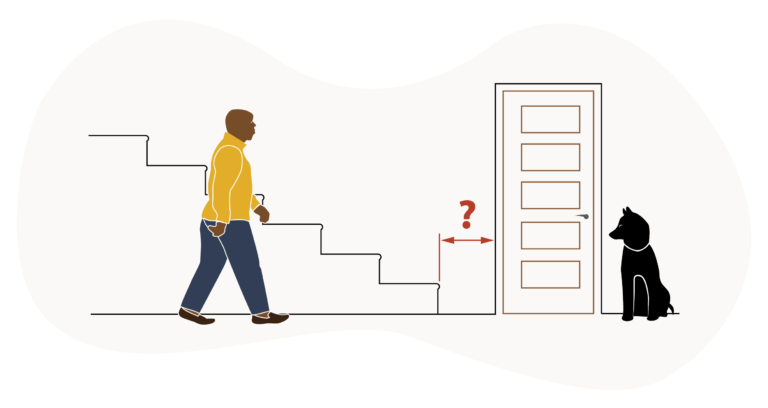
A stairlift can be installed with a door at the bottom of the stairs, though the layout must allow for clearance when the lift is parked. If a door is located at the base of the staircase, it may limit the available space for the rail and the chair. In these cases, a retractable rail can be used to lift the lower section of the track out of the way when the stairlift is not in use. This helps maintain access through the doorway while still allowing the stairlift to complete its full travel path. A ball latch can be installed to keep the area clear and allow for a door to open smoothly.
Installing a stairlift with a door at the top of the stairs
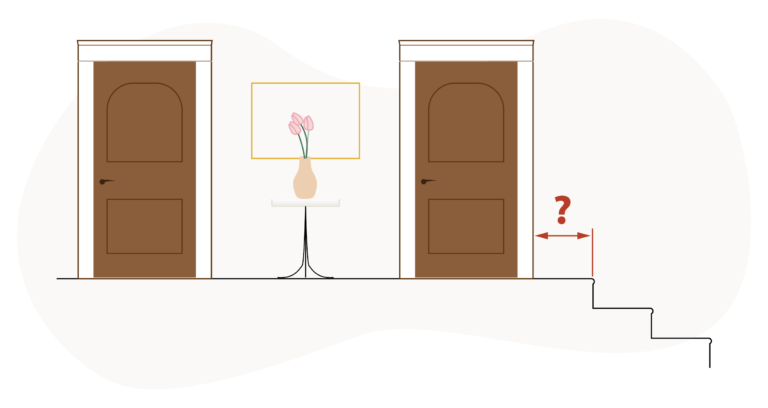
A stairlift can be installed with a door at the top of the stairs, as long as there is enough space for the chair to complete its travel and allow for safe exit. During an in-home assessment, measurements are taken to confirm there is sufficient space for the seat to swivel at the top landing and allow for clear access. The stairlift is configured so it can complete its run without interfering with the door. If necessary, a ball latch may be installed to help maintain clearance and allow the door to open easily and reduce pinch hazards for the user.
Can a stairlift be installed on any type of stairs?
In most homes, a stairlift can be installed on a wide range of staircase types, including straight, curved, and multi-landing layouts. Stairlift installation is based on the staircase layout and how each section connects. During an in-home assessment, measurements are taken to determine how the rail can be fitted to follow the full path of the stairs.
Choosing the right side of the stairs for installation
In most cases, a stairlift can be installed on either side of the staircase, depending on the layout and available space. The placement is determined by factors such as staircase width, nearby obstructions, and how the stairlift will travel between levels. Measurements are taken to identify which side provides the most clearance and allows the rail to follow the staircase effectively.
How handrails affect stairlift installation
Stairlift installation can be completed with existing handrails, though their position may affect the available space on the staircase. Handrails are typically located on the wall opposite the stairlift to maintain clearance along the rail path. If a handrail is in the way of the installation, it can be removed during the process, but a licensed contractor will be needed to reattach it afterward. If egress allows, a handrail can be moved to the other side of the staircase or the lift can be installed with the handrail still intact.
Installing a stairlift on carpet or hardwood stairs
Stairlifts can be installed on both carpeted and hardwood staircases without altering the surface. We can install on all sorts of carpet and hardwood, even working around runners. Regardless of what’s covering your stairs, we can likely install a stairlift on them.
Stair materials compatible with stairlift installation
Our stairlifts can be fitted to a wide range of stair treads, including wood, concrete, and metal. If you decide later that you want to remove your lift, all you’ll be left with are a few tiny screw holes on some of the steps. They’re easy to repair, even if your stairs are hardwood.

Do you need remodeling to install a stairlift?
Stairlift installation does not require remodeling because the system is mounted directly to the stair treads rather than the wall. This also means that an adjacent wall isn’t necessary for installation. Stair treads are made to carry a significant amount of weight, so you won’t have to reinforce them or make any changes ahead of time.
Stairlifts are designed to fit within the existing layout of your staircase. The rail is measured and installed so the chair travels close to the edge of the stairs, typically taking up about 7 1⁄2 inches (19 cm) of the staircase width when folded, depending on the layout and any obstructions.
Getting started with your stairlift installation
Every installation starts with a closer look at the staircase itself, including how it’s built and how each section connects. This helps determine how a stairlift can be fitted and how it will move between levels.
Schedule a stairlift assessment
Contact us to book your free in-home assessment. We’ll make sure that your stairs are suitable for a stairlift and take you one step closer to feeling the freedom and independence a stairlift can bring.
Quick delivery and efficient stairlift installation
Once you’ve placed your order, we’ll set up a convenient time for installation. Straight stairlifts take only a few hours, and curved stairlifts take about a half-day to install. Our friendly technicians will arrive on time, install your lift, make sure you know how to use it, and be on their way.
Ready to take the next step? Explore stairlift options tailored to your staircase and layout.

Would you like a free brochure?
Request your free glossy brochure now, and get it delivered straight to your door.